A LAO Group White Paper · by Liza Akinyi · 2026
Capital is finally moving toward women. So why isn't it becoming scale?
Because a venture rises only to the level of its builder, and the builder is the one variable the access agenda has never funded.
US$124 trillion is changing hands in the greatest wealth transfer in history. African women start businesses at the highest rate on earth. Yet women-led ventures still attract under 7% of the continent's venture funding. This paper names the missing half of the explanation, and gives capital allocators and founders a staged model to fix it.
Founder identity and the capitalisation of African women-led enterprises. A practitioner study of 33 founders and senior leaders.
Access is only half the explanation.
The other half has been sitting in plain sight: inside the founder herself.
Decades of investment have brought African women to the door of the capital system. Access to finance, markets and networks remains unequal, and the resources directed at those barriers are necessary and not in dispute. But a founder can be extended capital she is not yet able to price for, introduced to markets she is reluctant to claim, and placed in networks she does not occupy fully. Where an external barrier coincides with an internal one, the external intervention under-delivers.
Drawing on a nine-month practitioner study of 33 founders and senior professionals in Kenya, this paper identifies five recurrent internal constraints, learned postures that once conferred safety and now impose a ceiling, and shows how they compound the structural barriers capital programmes already target.
The premise throughout is that women are whole, creative and resourceful. The question is not whether women can steward capital. It is how that capability is fully resourced, so that the capital arriving in their hands realises its full potential.
The proposition for those who deploy capital: strengthening the builder is human capital derisking: a condition of realising the full return on the capital moving toward women.
The Kenyan Paradox: presence everywhere, capital nowhere.
Kenya is the demanding test case. If presence alone produced scale, the conversion should be most visible there. It is not.
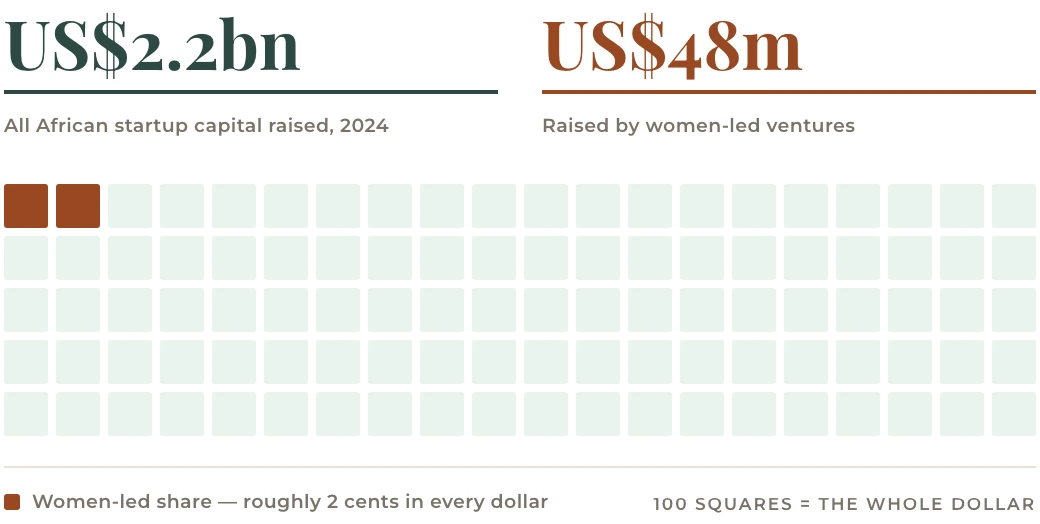
African startup capital raised in 2024. Women-led ventures: US$48m against US$2.2bn: roughly 2 cents of every dollar.
Kenyan women are firmly established by every measure of representation, and largely absent by every measure of capital.
In a market where women already hold a third of board seats and well over a third of executive roles, the persistence of the capital gap cannot be attributed to the absence of opportunity alone.
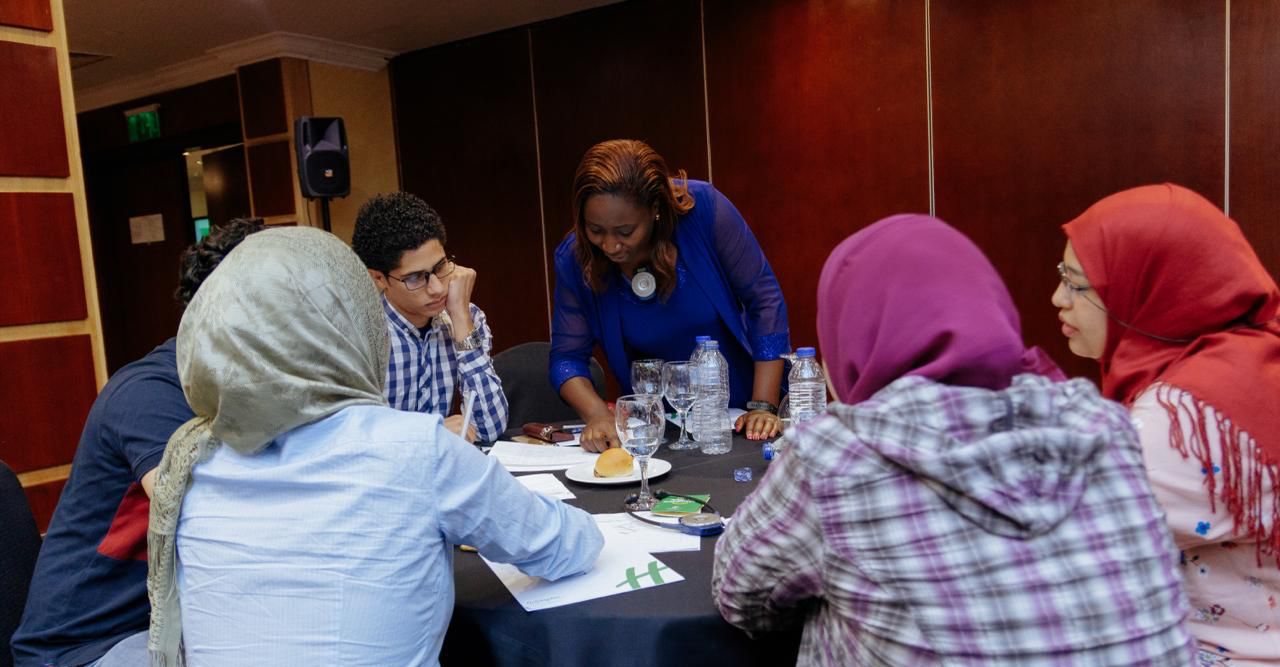
This paper was built in rooms like this one.
33 founders and senior professionals. 103 hours of structured coaching dialogue over nine months. The findings come from the operative beliefs of real builders, recorded in their own words, then corroborated against peer-reviewed, large-sample research.
The five constraints that cap capable builders.
None of these is a deficiency. Each is a learned posture that once conferred safety and now imposes a ceiling, and each is corroborated by independent, large-sample research.
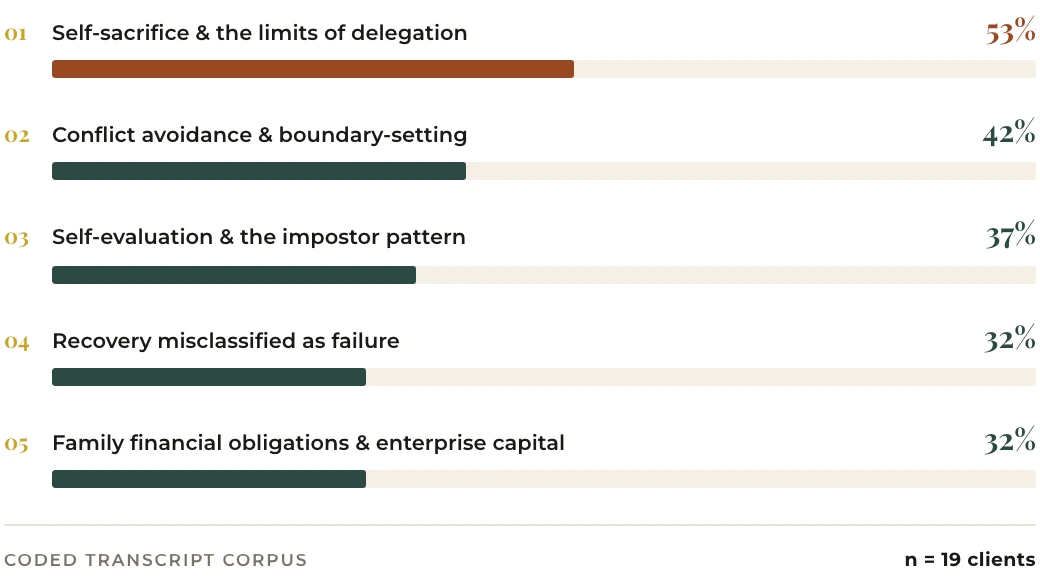
Share of the 19 coded clients exhibiting each pattern. Thematic saturation was reached before the corpus was exhausted.
It is not about what I need to do in order to make something work. It is about who I need to become.
Written for those who deploy capital, and the women who build with it.
Human capital derisking
- Why access-only programmes capture only part of the available return, and where the rest sits
- The limits of the access paradigm, argued with the 2X lens in view
- A staged model for developing the builder alongside the venture: diagnose, reframe, rebuild, embed, scale
- Why founder identity should be treated as infrastructure, not a soft add-on
From central node to architect
- The five constraints, named, and why none of them denotes a deficiency in you
- Case studies from femtech, healthcare and wellness founders who made the shift
- Why the transition enlarges rather than diminishes the role you occupy
- The Ubuntu grounding: leadership located in a collective, not an isolated individual
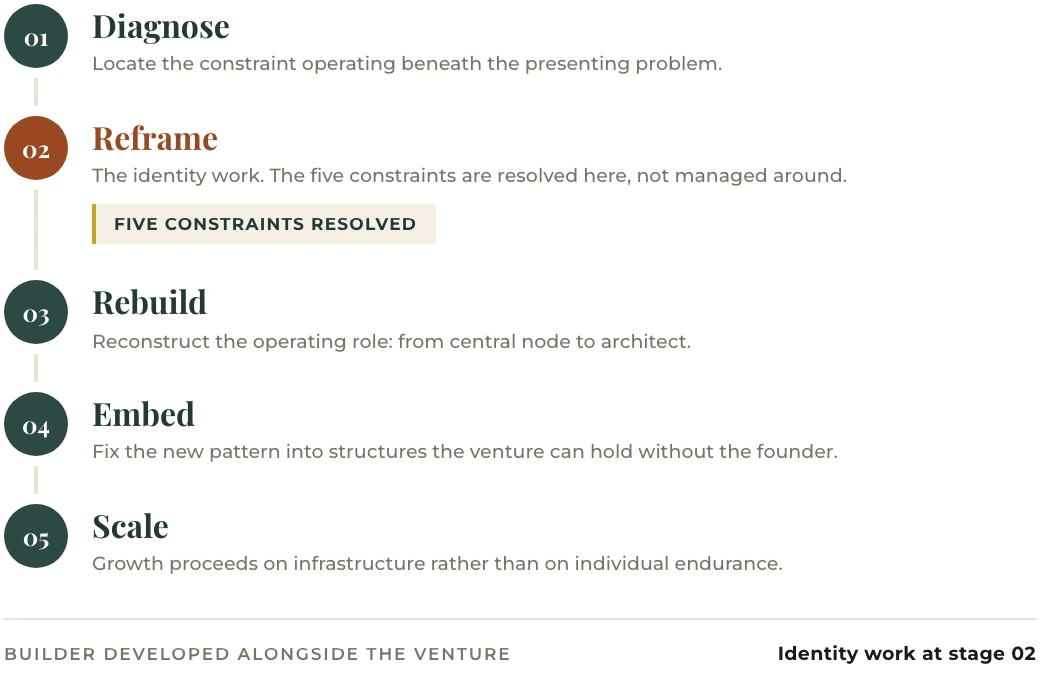
A staged model for developing the builder alongside the venture, with identity work located in the reframing phase, where the five constraints are resolved.
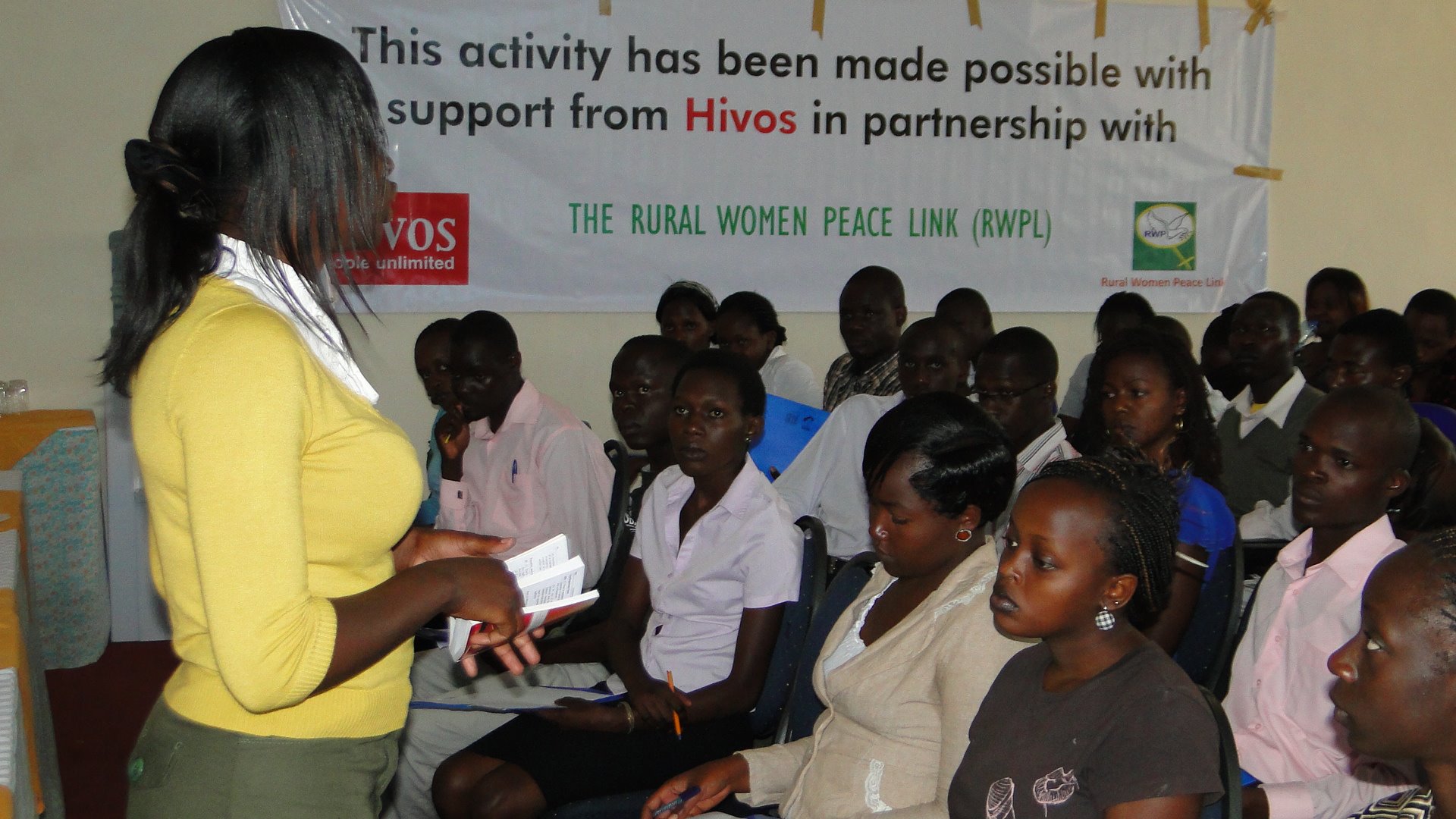
The next generation of women institutional leaders is already forming.
From Nairobi to Lagos to Accra, African women establish enterprises at the highest rate of any region on earth. Closing the financing gap could add an estimated US$316 billion to the continent's output, and the paper sets out how to resource the builders behind those numbers.

Written from every side of the table.
Liza Akinyi is a Pan-African venture builder and executive coach who has founded, scaled and exited businesses across technology, real estate and wellness. Over fifteen years and more than twenty African countries, she has worked as a founder, as an advisor to founders, and inside the institutions that fund them, including leading monitoring and learning for an £8 million FCDO enterprise programme across ten countries, building the evidence base that secured £53 million in follow-on funding.
The practitioner study reported in this paper draws on her executive coaching practice, conducted under her Heart + Strategy methodology.
Frequently asked questions.
In 2024, women-led ventures across Africa attracted approximately US$48 million against US$2.2 billion for men-led ventures, under 7% of the continent's venture funding. This paper argues access barriers explain only half the gap; the other half is internal: five learned constraints that cap how capable founders price, delegate, set boundaries and deploy capital.
Kenyan women own 31% of SMEs, hold 37% of C-suite roles and 35% of NSE-listed board seats. Yet only 7% of women-owned MSMEs hold formal access to finance, and around 3% of corporate procurement reaches women-owned firms. Presence has risen; scale has not followed.
Self-sacrifice and the limits of delegation (53%); conflict avoidance and boundary-setting (42%); self-evaluation and the impostor pattern (37%); recovery misclassified as failure (32%); and family financial obligations versus enterprise capital (32%), measured across 19 coded clients in a 33-participant practitioner study.
The paper's proposition for capital allocators: because a venture rises only to the level of its builder, resourcing the founder's internal agency, alongside access to finance, markets and networks, is a condition of realising the full return on capital moving toward women.
It's a free 12-page PDF. Enter your email and we'll send you a secure download link straight away. The link stays valid for seven days.
Read it before the next dollar is deployed.
The capital moving toward women will realise its full potential only if the builder is resourced alongside the venture. The argument, the evidence and the model are in the paper.